

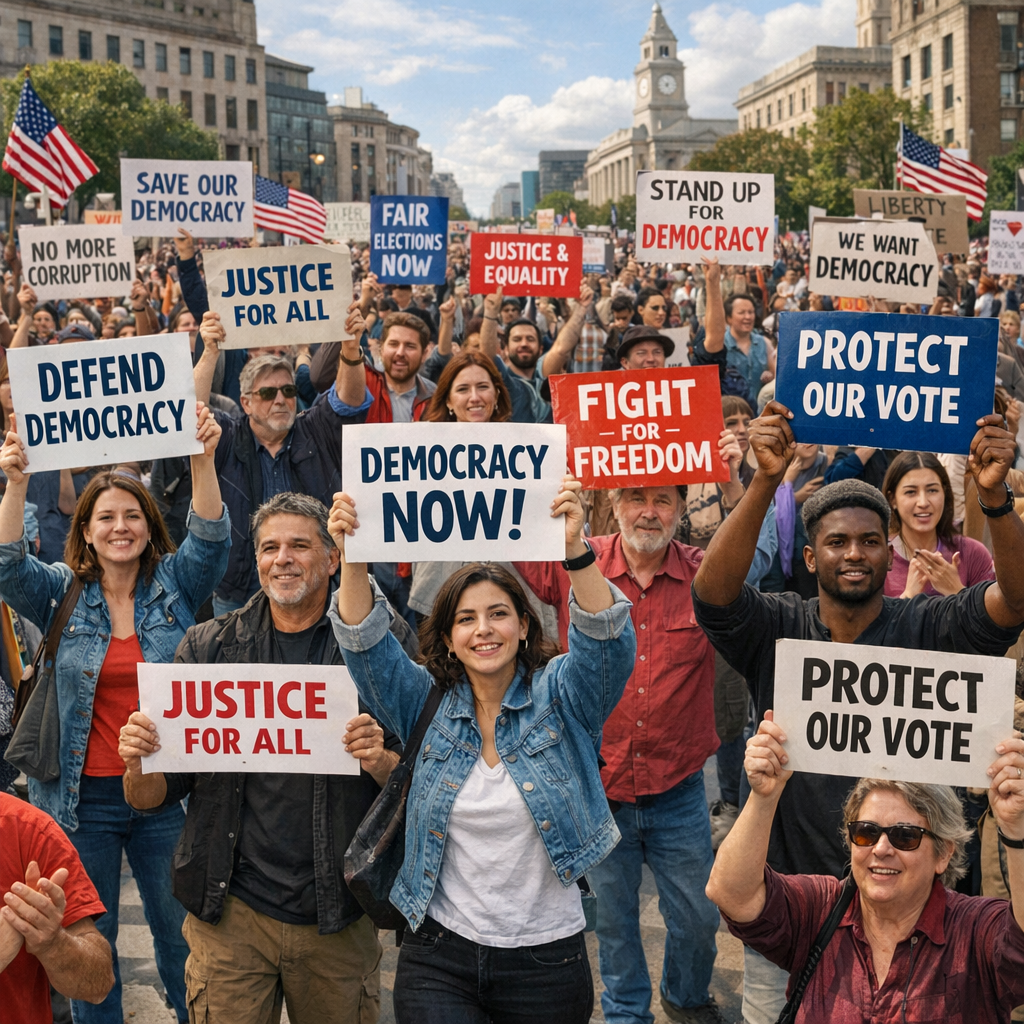
In recent times, the ‘No Kings’ movement has gained momentum across the United States, advocating for the preservation and strengthening of democratic values. This grassroots initiative has resonated with many Americans who are concerned about the direction of national policies and governance.
Origins and Objectives
The ‘No Kings’ movement began as a response to perceived overreach by federal authorities and policies that some citizens view as undermining democratic institutions. The movement’s name symbolizes a rejection of authoritarian tendencies and a commitment to the foundational principles of the republic.
Nationwide Demonstrations
One of the most notable events associated with the ‘No Kings’ movement was a series of rallies held across the country. These gatherings drew large crowds in cities and towns, reflecting widespread support for the movement’s ideals. For instance, in St. Paul, Minnesota, thousands gathered on the Capitol lawn to express their commitment to democratic values. The event featured prominent figures who praised the community’s dedication to resisting policies they deemed aggressive.
Impact on Local Communities
The movement’s influence extends beyond large urban centers. In smaller towns and communities, individuals have organized local events, discussions, and educational sessions to promote civic engagement and awareness. This decentralized approach has allowed the ‘No Kings’ movement to foster a sense of unity and purpose among diverse groups of citizens.
Looking Ahead
As the ‘No Kings’ movement continues to evolve, its focus remains on encouraging active participation in the democratic process and holding leaders accountable. Supporters emphasize the importance of informed voting, community involvement, and open dialogue to address the challenges facing the nation.
In conclusion, the ‘No Kings’ movement represents a collective effort to reaffirm and protect the democratic values that are central to the American identity. Its growth and persistence highlight the enduring commitment of citizens to uphold the principles of liberty, justice, and equality.