

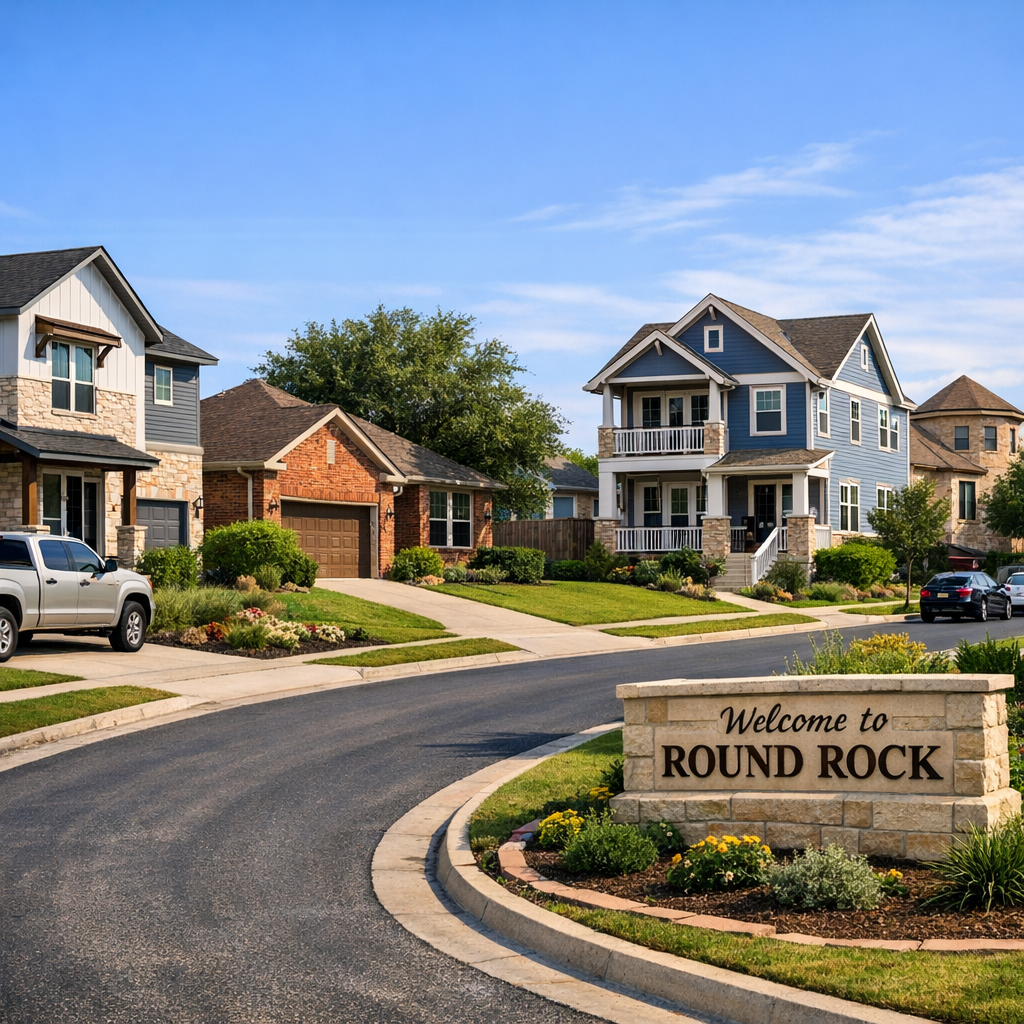
I moved to Round Rock because I heard about families walking their kids to school, neighbors knowing each other by name, and a small-town feel just minutes from a metropolis. Over the years, though, I’ve watched our city stretch, skyward and outward, and I’ve wondered: what gets lost—and what can we hold on to?
The call for variety in housing
There’s no denying our city is growing fast. Recent reports estimate the population within Round Rock has passed 140,000—and Greater Round Rock is projected to approach 266,000 by 2040. To keep pace, officials are prioritizing new housing types: townhomes, duplexes, small multifamily units, and senior-friendly options. Many residents like the idea of smaller homes or lots; others want ways to downsize without leaving Round Rock. Affordability and quality are front of mind for a lot of people. We want housing that feels ours, not something that sacrifices character for a quick return. (Round Rock 2030 Housing Summary)
Downtown changes, familiar concerns
Changes downtown offer both promise and concern. New zoning proposals could allow buildings up to 12 stories in certain corridors. Other areas would transition from single-family zones to mixed-use, shifting the rhythm of what “home” means in those neighborhoods. Supporters say it’s about vibrancy—more dining, more retail, more chance for walkability. Opponents worry about shadows, traffic, loss of quiet. These tensions aren’t unique to right now; I’ve heard echoes of them at countless community meetings. We want progress, just not at the expense of what makes Round Rock feel like Round Rock. (Residents debate downtown zoning changes)
When industrial meets residential: A tipping point
The conflict around the proposed Skybox AI data center along Old Settlers Boulevard pushed many past quiet concern into public action. Neighbors voiced worries about noise, water use, and power infrastructure strain. Petitions gathered thousands of signatures. Still, the council approved the rezoning, triggering frustration among folks who feel their voices were ignored. It raised a deeper question: how should we strike balance between economic development and environmental and residential well-being? (Community Ignored as Another Data Center Is Approved)(Protect Round Rock concerns)
What people love—and what residents hope endures
- Many often point to open spaces, trees, parks, trails, and historic downtown as core to Round Rock’s identity.
- People say the community feels welcoming; kids playing, homecomings, house gatherings—simple things that build roots.
- Striking that balance between breathing room and density—lower lot sizes, walkable development, and thoughtful corridors—is what many want in the upcoming decades.
So what can we do?
Here are ideas that show promise:
- Participatory planning: More town halls, better outreach, and community-based workshops where everybody has a seat at the table.
- Smart zoning: Mixed-use zoning that respects scale, height, setbacks; zones which buffer noise, traffic, and industrial impacts from homes.
- Prioritize quality of life: Trees, sidewalks, parks, shade, and local businesses when figuring out where and how to grow.
- Clear rules for developers: Affordable housing units or options, infrastructure cost and water usage transparency, and agreed standards for how mixed-use or industrial development fits the neighborhood.
Growth in Round Rock is inevitable. What isn’t inevitable is the kind of city we become. What if, even as we build more homes, think bigger buildings, and welcome new business, we make sure we don’t lose the air, the trees, the people, the soul? That kind of care—that sense of stewardship—is what will matter most 20 years from now.