

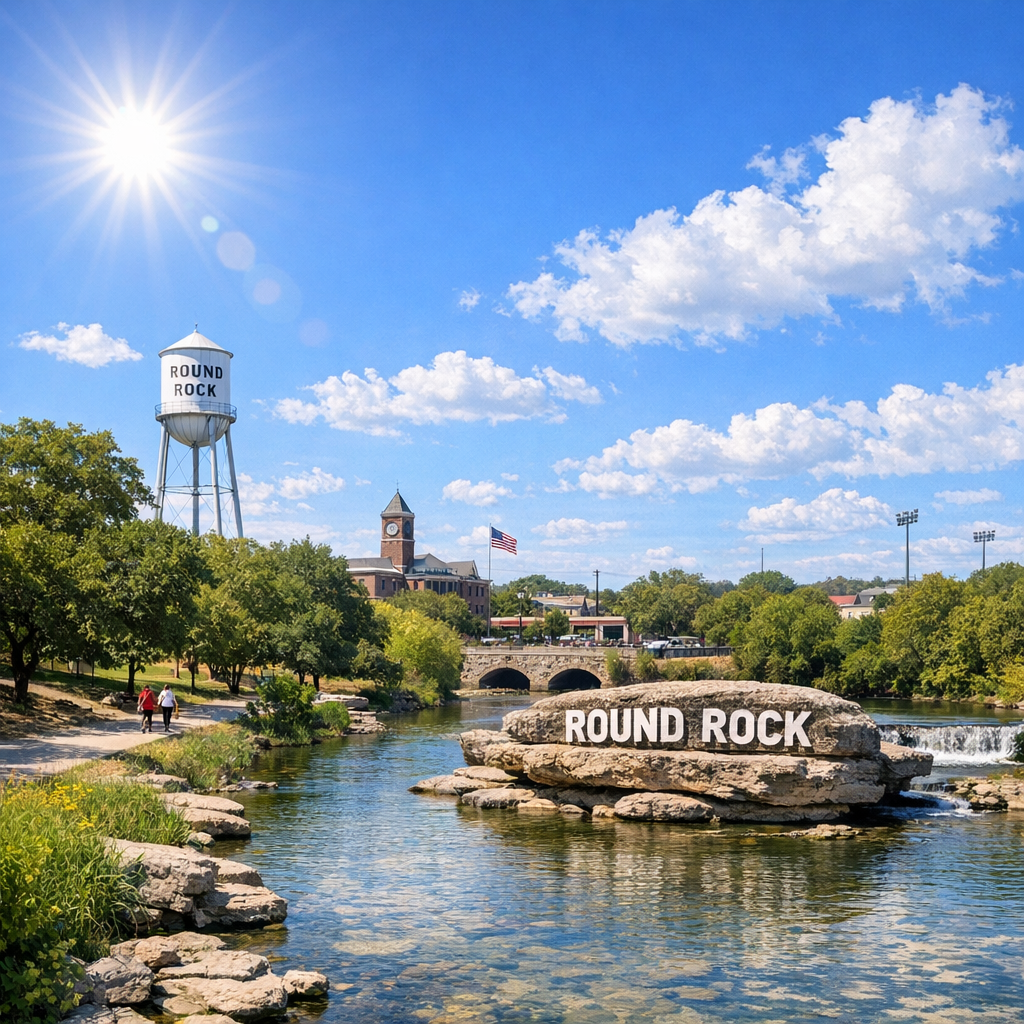
Round Rock, Texas, experiences a humid subtropical climate characterized by hot summers, mild winters, and moderate rainfall distributed fairly evenly throughout the year. Understanding these patterns can help residents and visitors prepare for the varying conditions each season brings.
Seasonal Temperature Variations
Summer (June to August): Summers in Round Rock are notably hot and humid. Average high temperatures range from 91.7°F (33.2°C) in June to 96°F (35.6°C) in August. The combination of heat and humidity can make outdoor activities challenging during peak afternoon hours.
Winter (December to February): Winters are generally mild, with average high temperatures around 61.3°F (16.3°C) in January and lows dipping to approximately 37.8°F (3.2°C). While snowfall is rare, occasional cold fronts can bring brief periods of cooler weather.
Spring (March to May) and Fall (September to November): These transitional seasons offer more moderate temperatures. Spring sees average highs climbing from 71.6°F (22°C) in March to 85.3°F (29.6°C) in May, while fall temperatures decrease from 90.2°F (32.3°C) in September to 70.3°F (21.3°C) in November.
Precipitation and Humidity
Annual rainfall in Round Rock averages about 37.21 inches (945.12 mm), with May typically being the wettest month, receiving around 4.51 inches (114.55 mm) of rain. Humidity levels fluctuate throughout the year, peaking in May at 75% and dropping to their lowest in August at 59%.
Environmental Considerations
Residents should be aware of environmental factors such as drought conditions and invasive species. For instance, local lakes used for water supply and recreation have been classified as infested with zebra mussels, an invasive species that poses a threat to aquatic ecosystems and infrastructure. Additionally, the City of Round Rock has developed a Stormwater Management Program to reduce pollutants and improve water quality in local water bodies.
By staying informed about these climate patterns and environmental issues, the community can better prepare for seasonal changes and contribute to the preservation of Round Rock’s natural resources.